At a time when America’s meat industry faces increasing consolidation, fragile supply chains, and the closure of rural processing facilities, Better For Butchery’s acquisition of the Princeton Kentucky plant represents a rare, forward-looking investment in independent meat infrastructure. Backed by USDA Rural Development financing, the facility will serve as a scalable, high -integrity co-packing and processing hub designed to help farmers, ranchers, and emerging meat brands reach market without sacrificing quality, transparency, or control. USDA Rural Development played ia critical role n enabling the acquisition. The facility was financed through an MPILP loan backed by the USDA aimed at strengthening rural economies, expanding
  domestic meat processing capacity, and supporting independent producers seeking alternatives to large-scale industrial packers. the facility now serves as Better For Butchery’s centralized processing, packaging, cold storage, and fulfillment hub. Purpose-built to support third-party brands, the operation enables consistent quality, reliable scheduling, and national distribution for farmers and food businesses that have historically struggled to access scalable processing. Better For Butchery’s acquisition marks a turning point for the company—from turnaround operator to platform-scale processor—and formally launches its co-packing and third-party processing services for emerging and established food brands committed to ethical sourcing and operational transparency. Chris Roach, CEO of Better Butchery joins Farm To Table TAlk to share what’s possible when public investment and private execution align. “With USDA Rural
 Development’s support, we’re rebuilding meat infrastructure in a way that works for farmers, workers, and brands alike—right here in rural Kentucky. Our approach is proving that modern, compliant, and values-driven meat processing can be decentralized to establish a new meat economy that is better for farmers, better for animals and better for all of us.” www.BetterForButhery.com www.porterroad.com
Podcast: Play in new window | Download
Subscribe: Apple Podcasts | Spotify | Android | Podcast Index | Email | TuneIn |
 the farm bill that would reverse state voter decisions establishing guidelines for pork production practices (gestation crates) if they want to market in that state. The US Supreme Court has already ruled in favor of state’s right to make restrictions tied to production practices. Not to be deterred another attempt to supercede the Supreme Court and voters choice is being proposed for the Farm Bill under the deceptive title of “Save Our Bacon Act”. Everyone who cares should call to leave a message for their US Senators. Senate switchboard, 202 224 3121 .
 youth. Her background as an educator and her family’s transition from suburban gardening to farming led to the creation of Farm Teach, which uses principles of regenerative agriculture to help young people process trauma and develop resilience. She discussed the program’s focus on diversity, using the metaphor of an ecotone, and nature’s lesson that
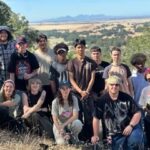 diversity creates resilience. The Farm Teach program is funded through grants, especiallyfrom the California Department of Food And Agriculture and is evolving its funding strategy to include direct contracts and program support. Farm Teach helping a new generation with their own approach to farming, food systems, and sustainability.
 Some messages are worth hearing again such as this re-released classic from July 2023 with Elizabeth Hilborn.
 the Earth requires of us according to author/philosopher Wendell Berry. “We have the world to live in and the use of it to live from on the condition that we take care of it. And to take good care of it we have to know it and we have to know how to take care of it.” We have to love it. Farm To Table Talk brings back the wisdom of Wendell Berry at his passing.
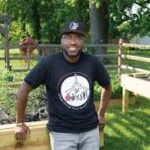 published April 2024, Pastor Heber Brown III, explains the launching of the Black Church Food Security Network (BCFSN) in 2014 with a garden at his own church, Pleasant Hope Baptist Church in Baltimore, now they have 250 in the network. BCFN was founded after he noticed a pattern of hospitalizations related to diet and other issues and was determined to change health outcomes for his congregation. What began with encouraging churches to start gardens on church premises, has since grown to include encouraging congregations to make institutional purchases from Black farmers, host farmers markets, preferably on Sundays after church, and arrange tours of Black farms.
 father’s advice to “leave the land better than you found it,” He shares his journey from farming in South Dakota to leading the Natural Resources Conservation Service during the Bush administration to his role with Strategic Conservation Solutions. Rodger and Bruce explore various conservation programs including the Environmental Quality Incentives Program (EQIP), Conservation Reserve Program (CRP), and how these programs have evolved to support farmers in implementing practices like rotational grazing, no-till farming, and cover crops. Bruce explains how these programs have grown from initial federal funding to include private sector partnerships with food companies like McDonald’s and Nestle investing in regenerative agriculture initiatives. They discussed the balance between voluntary conservation incentives and regulatory compliance, noting that while some farmers are proactively seeking to improve their land, there is relatively light regulatory oversight. The conversation concluded with Bruce expressing optimism about the growing interest in conservation and sustainability among young people entering the field, noting that the food movement has made conservation popular again and created opportunities for both small and large-scale farmers.
 consumers knowledge of crop issues, food supply now and in the future. Rodger interviews Nick Ohrtman from Earth Daily, a remote sensing analytics company, on the Farm to Table Talk podcast. Nick explains that Earth Daily has a constellation of 10 satellites to providing daily, 5-meter resolution imagery of the Earth’s landmass, primarily for agricultural monitoring. The data can track crop conditions globally, assist in forecasting production, and help farmers and food companies make informed decisions. The conversation coveresthe technical aspects of satellite imagery, the role of AI in processing data, and the applications for various crops beyond major
  commodities. They also toucheon the implications of climate change and how remote sensing can aid in adapting to new growing conditions. The value of this technology is the understanding of global food supply dynamics and improving efficiency in agriculture for a broad swath of food systems, from global views to local use. www.earthdaily.com
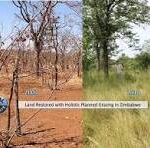 contributions to sustainable agriculture, environmental conservation and attention to global policies that will make a difference.
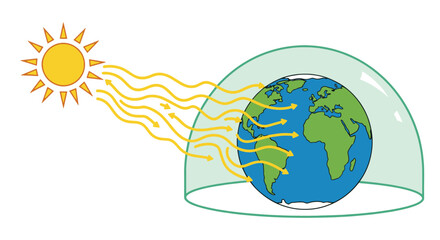 With current global, political and societal crises, the urgent need to fight climate change is being pushed to the edges. It’s not happening with Farm To Table Talk as we re-visit a podcast classic and the claim that Agriculture will reverse the dangerous levels of greenhouse gases in the environment, if Ag follows a report prepared by leading scientists, reviewed by CAST (Center for Ag Science and Technology) and published by the US Farmers and Ranchers In Action. Dr.Marty Matlock, University of Arkansas and leading author of the repot explains how combining reduced greenhouse gas (GHG) emissions with increased carbon sequestration will achieve GHG-negative agriculture in five areas offering the most significant opportunities to offset Ag’s roughly 10% of U.S. greenhouse gas emissions: soil carbon management, nitrogen fertilizer management, animal production and management, crop yield gap, and efficient energy use.
 produced under stricter standards. Opponents of Proposition 12 vowed to challenge the law all the way to the U.S. Supreme Court. In 2023, however, the Court upheld the measure in a closely divided 5–4 decision.Writing for the majority, Justice Neil Gorsuch concluded that states have broad authority to regulate products sold within their
 borders, even when those regulations affect producers in other states. The Court rejected arguments that the Constitution’s dormant Commerce Clause bars statesfrom adopting non-discriminatory laws simply because they impose compliance costs on a national industry. While the Constitution prohibits economic protectionism, the Court held that it does not prevent voters from restricting products they believe are produced through practices they consider cruel or unethical, provided the law applies equally to in-state and out-of-state businesses.Having failed in the courts, opponents have shifted their efforts to Congress. Language included in proposed Farm Bill legislation—often referred to by supporters as the “Save Our Bacon” provision—would limit states’ ability to impose production standards on agricultural products sold within their borders. Critics argue that the provision would effectively overturn Proposition 12 and similar state laws. The debate has attracted national attention. In a New York Times opinion essay titled “America’s Livestock Gulag,” columnist Nicholas Kristof argued that “the pork industry istrying to pull a fast one with this year’s farm bill,” citing polling that found strong public opposition to housing pregnant sows in gestation crates. A common misconception is that gestation crates are necessary to prevent sows from crushing piglets. That concern is generally addressed through the use of farrowing crates, which are used for a relatively short period around birth and weaning. Gestation crates, by contrast, typically confine pregnant sows in narrow metal enclosures for their 114- day pregnancy. Many pork producers in Europe have adapted to alternative housing systemsfollowing restrictions or bans on gestation crates. The question now moves from the courtroom to Capitol Hill: Should Congress override the will of voters and the Supreme Court’s ruling through the Farm Bill, or should states retain the authority to establish animal welfare standards for products sold within their borders?For listeners seeking a broader and balanced discussion of pig housing systems, we also recommend our earlier conversation with Dr. Pete Lammers of the University of Wisconsin–Platteville, who explores the practical, economic, and animal welfare dimensions of providing space for pigs.



 The Wall Street Journal editorial said President Trump said he was “delighted to give American Farmers $12 Billion” in economic Assistance. The President of the the American Soybean Assoiation told CNN that this was just “a bandaid on an open wound” because what farmers want is an opportunity to make a living, to make a profit from the market, “not being dependant on the next program to keep us from bleeding to death.” Blake Hurst, Missouri soybean farmer, substack author, sometime guest editorial writer to the Walls Street Journal and friend of Farm To Table Talk has some strong feelings and insights he shares with Farm To Table Talk.
 A backyard hobby that started over 40 years ago has grown into a nationally recognized, family-owned business that produces more than 80,000 quail weekly, raisied responsibly, without antibiotics or hormones, and shipping premium products to chefs, retailers, and home cooks across the country.
  authentic American entrepreneurship that resonates to anyone interested in food, health, sustainability, and family-led businesses. Quail could be the real other white meat that’s “what’s for dinner.” (Picture: Wassons enjoyed quail for Thanksgiving after joining over 34,00 in Sacromentos’s Run to Feed the Hungry.) www.manchesterfarms.com
 adding cattle, chickens, sheep, rabbits, and ducks, they established a farm market in a renovated barn to sell their produce and products, using social media to promote it. The farm market is now open three days a week, primarily on weekends, and relies on word-of-mouth and social media for advertising. They also grow over 200 varieties of USDA-certified organic vegetables, which are used for a four-course tasting menu dinner series held four times a month. www.theNJFarm.com
 addictively delicious is detrimental to our health. State Legislatures from West Virginia to California are not waiting for federal solutions. CA Asssembly-member Jesse Gabriel says “our public schools should not be serving students ultra-processed food products filled with chemical additives that can harm their physical and mental health and interfere with their ability to learn,” Scott Faber leads the Environmental Working Group’s government affairs efforts to reform food, farm, water and chemical safety policies. Faber is also an adjunct professor at Georgetown University Law Center. EWG.org/foodscores
 reasons over seventy million follow life style diets. That means over half of the country needs to know what is in their food. Dylan McDonnell is the Founder and CEO of Foodini, a company that strives to make it easy for Restaurants to help consumers and consumers to help themselves. It will soon be the law in California as it is already in Europe for restaurants to make this critical information available to their customers. https://foodini.co/
 When debates over SNAP funding heat up, it’s worth remembering leaders like Gus Schumacher —the late USDA Under Secretary who championed farm-to-family connections and bipartisan solutions. This Farm To Table talk episode revisits his insights on SNAP innovation, nutrition incentives and lasting ways to strengthen food access for all. Gus Schumacher, who passed away in 2017, was a respected agricultural economist and former Massachusetts Commissioner of Agriculture. He served as Under Secretary of Agriculture for Farm and Foreign Agricultural Services at the USDA from 1997 to 2001, overseeing the Farm Service Agency, the Foreign Agricultural Service, and the Risk Management Agency.Beyond his government service, Gus helped found the Wholesome Wave Foundation and championed reforms that continue to shape agricultural and food policy today. The USDA’s Gus Schumacher Nutrition Incentive Program proudly bears his name — a lasting tribute to his vision for connecting farmers and families through healthy food.
 crisis that directly affect farmers and ranchers, their famiies, their communities and ultimately all of us. The rate of suicide in rural communities is 50 % higher than the rate in non-rural communities. And with farmers the rate is 3 times higher than urban. What is going on? Why must we care and how can we help or be helped? Jim Ennis is the Executive Director of Catholic Rural Life. www.catholicrurallife.org
 Hot Springs, Arkansas will soon be known as the Napa Valley of Saké if Matt Bell has his way. Saké rice grown in Central Arkansas supplies Origami Sake, the fastest growing US saké brand and the only US brewer to win a Gold Medal at the Tokyo Saké Challenge 2025. Origami is also the largest domestically-owned saké brewery in the USA, 100% powered by solar energy and producing three Saké styles plus a non-alcoholic Sake. (
 fundamentally from diverse independent farmers and business and a union to concentrated cooperative agriculture and Walmart, Dollar General and no union. Art Cullen won the 2017 Pulitzer Prize for exposing what corporate agriculture was doing to his Iowa farming
 ommunity. His new book “Dear Marty, We Crapped in Our Nest” reveals what’s really happening in rural food systems from someone who’s lived and reported there for decades. His reporting reveals how corporate agriculture affects the entire food chain, from soil to table. Art exposes how corporate consolidation impacts not just farmers, but entire rural communities, water quality, and the long-term sustainability of our food system. His family-owned newspaper proves that independent food journalism can still hold powerful interests accountable. www.stormlake.com
 outbreak in history, with serious risks beyond poultry. Avian influenza risk especially rises when waterfowl migrate in the fall, Maurice Pitesky, University of California Cooperative Extension poultry specialist has developed the
 stores? During the tragic California fire caused mudslides of 2018, the town of Summerland was cut off from the rest of the world and the food supply chain. The devastating effects of the tragedy and the consequences of no grocery stores in Summerland reached a turning point when customers started fighting over stale sandwiches or snacks left at Liquor stores or gas stations. These experiences led to the establishment of Sweet Wheel Farms – a community asset to solve the absence of food, to expand farm education to the next generation on chemical-free farming, ecology and food as medicine, bio dynamics in both plants and soil, and eco-utilities. The Santa Barbara Agriculture & Farm Education Foundation established the farm to provide food security, increase awareness and educate how our food is grown and distributed.
 And to not be vulnerable to whatever disaster nature has in store for them in the future. President/Farmer Leslie Person Ryan shares the lessons learned and how local agriculture is vital.
 Montana and an expert in livestock production, livestock marketing, and economic development of pastoral areas, with experience in the Horn of Africa and the Middle East. He pursued a dual career, managing and working the family ranch since 1975, and accomplishing numerous assignments in the Horn of Africa and the Middle East for agencies and organizations such as USAID, FAO, European Commission, Save the Children Federation, and the British Red Cross Society. He shares perspectives on problems and solutions in his book, “Feeding A Divided America – Reflections of a Western Rancher in the Era of Climate Change.”
 Sacramento School District’s Central Kitchen is revolutionizing the way to feed over 40,000 students with scratch made, nutritious, local foods. Kelsey Nederveld, is the Director of Nutrition Services at Sacramento City Unified School District, was instrumental in building and designing the district’s own Central Kitchen, a food processing facility that is focused on scratch made, locally sourced ingredients to create wholesome meals, with the support of local chefs and farmers–revolutionizing school lunch. Kelsey will host a panel featuring Alice Waters at Terra Madre panel Cultivating Change: Transforming California School Meals Through Vision and Action www.thecentralkitchen.org
 The MAHA Commission Report to President Trump, outlines the administration’s strategy to “Make Our Children Healthy Again”. Professor Jerold Mande, CEO of Nourish Science and Rodger Wasson, host of Farm To Table Talk podcast, review the report and discuss what it is in it and what is missing. www.nourishscience.org
 Farm to Table Talk is about good conversations and no one was better at facilitating conversation than Bill Moyers who has passed away at the age of 91. A journalist, minister, Peace Corps and Great Society leader, Bill Moyers also showed his interest and support of farmers, such as his thoughtful interview with the legendary Wendell Berry. He told Rodger Wasson it was fine with him to have his Wendell Berry conversation shared on the Farm To Table Talk podcast so in his honor, at his passing is that conversation. Wendell told Bill , “We don’t have the right to ask whether we are going to succeed or not; the only question we have the right to ask is what’s the right thing to do? What does this Earth require of us if we want to continue to live on it?” Bill Moyers is a legend himself for matchless, thoughtful interviews such as this interview in October 2013, that was a production of the Schumann Media Center, Inc. and Mannes Productions, Inc.© 2013
 When vegan chef Mollie Englehart finally became a farmer, she had the big idea to create a farm where nothing had to die. Animals would live out their days munching grass, with no blood on her hands–straight out of her vegan chef playbook. Mollie built her successful LA Vegan restaurants on that ethical stance: compassionate food, no suffering, all love. in LA, feeding people while saving the planet. . Farming would be the next step: acres of peace—a sanctuary where every goat, duck, and sheep got a happy ending, like it was a mission from God. Mollie Englehart’s journey and lessons learned is a book, Debunked by Nature: One Woman’s Journey from Vegan Chef to Regenerative Farmer—and the Truths She Discovered Along the Way.
 Climate change, population growth, demand for animal products, pest resistance to traditional treatments and misguided policies lead to food shortages and escalating food prices. In 2023, 733 million people faced hunger and 2.3 billion were moderately or severely food insecure. Policies to support biofuels, organic agriculture, local foods, and small farms and to oppose genetically modified foods all reduce food production on existing land.–leading to higher food prices, increased carbon emissions, and less natural habitat as cropland expands. Richard Sexton is a professor of Agriculture and Resource Economics at UC Davis and author of FOOD FIGHT: Misguied Policies, Supply Challenges and the Impending Struggle to Feed a Hungry World.
 Anna Jones is a farmer based in the Welsh uplands who brings a thoughtful and practical perspective on sustainable livestock farming. Although she came into agriculture later in life, Anna grew up on her family’s sheep and beef farm and returned in her mid-20s to help keep it in the family. She now works alongside her father and is gradually introducing more sustainable and data-informed practices to the farm. They supply Waitrose a high-end grocery store chain in the UK, known for its quality products, particularly fresh food and organic options. She’s also exploring mixed grazing, breed changes to reduce land strain, and improvements to soil and slurry management, supported in part by Welsh government initiatives. Next for Anna and her family will be farm to table experiences on their farm.
 Natural resources, rural communities and agriculture come together in Siskiyou County where California borders Oregon. Wolves have been reintroduced, wildfires are a continuous concern, dams have been removed and efficient water sharing requires community engagement. Assisting with these needs is Grace Woodmansee University of California Cooperative Extension Service Livestock and Natural Resources Adviser. A key project is the Siskiyou Climate
  Collaborative (SCC) that is working to help a broad community network pursue planning and funding opportunities, that will better prepare for the wildfires, droughts, and extreme climate events. . https://www.siskiyoucounty.org/climatecollaborative
 Farmers around the world are resisting industrial monoculture in favor of biodiversity and soil-first practices with practical land stewardship rooted in indigenous knowledge, community building and long-term economic resilience. Regenerating Earth: Farmers Working with Nature to Feed Our Future by
  agriculture as told through the stories of farmers transforming the land—and their communities. Timmerman, who lives in rural Indiana and comes from a farming family, brings a neighbor’s eye and a journalist’s ear to the regenerative movement.
 passionate about providing farmers with tools and systems that they need to thrive. He is host of the Thriving Farmers podcast, founder of Small Farm University, and runs his own farm operation with his wife Savanah and their 4 children at the Farm on Central in Southwest Ohio. www.growingfarmers.com
 Small farms can be profitable farms, especially if they adapt and grow to include adding value to their production. Michael Kilpatrick is a farmer and educator who is passionate about equipping farmers with the tools and systems they need to thrive! He offers educational resources as host of the Thriving Farmer podcast and through his virtual summits and online community Small Farm University. He also runs his own farm operation with his wife Savannah and their four children at the Farm on Central in southwest Ohio. Thriving Farmer Podcast is available from your podcast sources.
 Although it is appealing to go solo, succeeding in the food system today requires working in cooperation with others: family, neighbors, associations, boards, committees, suppliers, or customers. Working out a partnership or agreeing to serve on a board or committee, may not be what you signed up for but good luck trying to go it alone. Blake Hurst is a farmer in North East Missouri, former President of the Missouri Farm Burieau, occasional guest farm column author in the WallStreet Journal and SubStack @HurstBlake. He joins host Rodger Wasson who has also managed agricultural organizations to share the urgent need for busy people to step up and form new relationships, serve on Boards and make contributions that matter.
 With a growing population of 1.4 billion people to feed, farmers in India are under constant pressure to increase productivity despite diminishing resources. Nearly half the population and most rural livelihoods rely on agriculture.. With volatile weather patterns and pest infestations, crop diseases and limited natural resources , Dr. Sat Kumar Tomer, Founder and CEO of Satyukt Analytics, sought to revolutionize farming by harnessing satellite data to provide affordable, actionable insights for small and larger farmers across India. Dr. Tomer assembled a team of researchers and engineers to build Satyukt Analytics. Together they developed Sat2Farm, a mobile application designed to empower farmers with real-time insights into crop health, water availability,
 and other crucial parameters. Central to Satyukt’s approach is the use of open-source satellite data from agencies like NASA and ESA. Dr. Tomer’s vision is to make Indian agriculture more efficient, sustainable, and resilient in the face of climate challenges.
 creation in Washington DC, providing hands-on culinary training for individuals facing high barriers to employment while creating living wage jobs and bringing nutritious, dignified food where it is most needed. Social ventures include serving scratch-cooked farm-to-school meals in DC schools, delivering fresh, affordable produce to corner stores in neighborhoods without supermarkets, and operating fast-casual cafes throughout the District of Columbia. Mike Curtin, CEO of DC Central Kitchen views food as a tool to strengthen bodies, empower minds and build communities. www.dccentralkitchen.org
 Ariane Daguin
 meat to top chefs across the U.S. and is now fully immersed in regenerative farming, community-based agriculture, and field-to-table education. Raised in a French culinary dynasty, daughter of a Michelin-starred chef, and now a farmer-distiller—Ariane brings tradition and transformation, ethics and flavor to Farm To Table Talk. www.alloneoneall.com www.dartagnan.com
 community, farming with horses, recognizes that overdosing with chemical “solutions “is killing the soil? When that Amish farmer is John Kempf it leads to fresh eyes for actions that can bring soil back to life. In Europe for hundreds of years Amish farmers were known for resuscitating impoverished land and today’s solutions will grow to include AI and resilient microbial communities. John Kempf hosts the Regenerative Ag Podcast and has established Agronomic consulting, with fresh eyes. www.advancingecoag.com
 here is Organic and there is beyond Organic to regenerative organic, including soil health, animal welfare and social.
  California Certified Organic Farmers, CCOF, advances organic agriculture for a healthy world: advocating for organic policies, supporting the growth of organic through educationand grants and providing organic certification. A nonprofit organization governed by farmers and founded in California over half a century ago, today it serves North America and beyond with the support of consumers and policymakers. Kelly.Damewood is the CEO of CCOF. Kelly has managed a small orgnaic farm before law school and ultimately becoming CCOF’s policy director, she has,spearheaded key initiatives such as passage of state legislation to improve an outdated regulatory program for organic farmers and creating a groundbreaking project to drive organic
 production and consumption in California. Kelly holds a Juris Doctor degree from Vermont Law School and a Master of Laws degree in agricultural and food law from the University of Arkansas School of Law. www.ccof.org
 Food is life but our food system isn’t helping. Designed in a different century for a different purpose—to mass-produce cheap calories to prevent famine—it’s now generating obesity, ill health, and premature death. We need to transform it into one that can nourish all eight billion of us and the planet we live on. That is the story learned in Food Fight by Stuart Gillespie. Dr. Gillespie has been fighting to transform our broken food system for the past 40 years. Stuart has been at the helm of the IFPRI’s Regional Network on AIDs, Livelihoods, and Food Security, has led the flagship Agriculture for Nutrition and Health research program, was director of the Transform Nutrition program, and founded the Stories of Change initiative, amongst a host of other interventions into public food policy. His work has driven change across all frontiers, from the grassroots to the political.FOOD FIGHT shines a light inside the black box of politics and power and, crucially, maps a way toward a new system that gives us hope for a future of global health and justice.
 The long-anticipated MAHA Report : “Making our children healthy again” is published. In the preamble it claims “to be a call to action, presenting the stark reality of American Children’s declining health, backed by compelling data and long-term trends.” It unpacks the potential dietary, behavioral, medical and environmental drivers behind the crisis. Rodger Wasson and Callie Eideberg of the Vogel Group studied the report and discus the implications to the food industry in this episode of Farm To Table Talk. Callie Eideberg is a well-regarded policy expert on agriculture, land conservation, water policy and environmental issues, known for her ability to work with both political parties. Before joining the Vogel Group she served as Senior Professional Staffer to Senator Debbie Stabenow, Chair of the Senate Agriculture, Nutrition and Forestry Committee.
 journey from farm to work for and with large, small, local and community farmers raising livestock, grain, produce, nuts and hopes. Farmhand supports this podcast: farmhand.partners/farmtotabletalk
 local communities and food systems, but are especially outmatched by the resources available to larger farms — technology, equipment, sales and marketing teams, and back office staff. So in partnership with local farms in Sonoma County California, Ari Memar founded Farmhand to level the playing field by equipping farmers with the technology and services to win back local share of the food dollar and support a thriving local food system. www.farmhand.partners/farmtotabletalk
 The food system is extremely inefficient with 237 million tons going unsold or uneaten.–becomingfood waste, which goes t to landfill, incineration, or down the drain, or simply left in the fields to rot. That’s almost 120 billion meals’ worth of food that goes unsold or uneaten each year, roughly 1.4% of U.S. GDP. The impacts on climate and environment are also enormoussince food that is never eaten still requires resources to grow, harvest, transport, cool, cook or otherwise prepare—even when it ends up in land fills. Minnie Ringland is the Manager of Climate & Insights for www.reFed.org.
 To be a good Doctor and to do good health you really need to understand farming and agriculture, because good farming also equals good health and overall wellness, once said Wendell Berry. Dr. Camilla Petersen owns her own concierge medical practice in Missoula Montana where creating good health starts with what we are putting into our bodies. Camilla is a ND, MD, FAAFP who grew up in the Ukraine and has practiced in Africa, South America, New Zealand, all over the USA and now in Missoula Montana where she is also a wife, mother of two, member of the Montana Medical Board, and a business owner.
 Regenerative agriculture is the opposite of Degenerative agriculture. Research and innovative farmers are showing that no-till with cover crops increases net profit, organic matter, water quality, air quality and builds soil while reducing runoff. Regenerating soil allows farmers to literally gain more land and grow more crops profitably without losing tons of soil per year from degenerative farming. Mike Lessiter is president of Conservation Ag and the NoTill Magazine.
 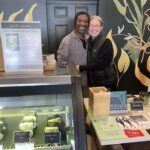 Changing what you eat is a journey that may lead to growing, preparing, and marketing before sharing and consuming your food focused dreams. When the destination of the journey is a plant based diet, it may be a challenging transition. When Heather and Reggie Donaldson were moving from LA back to Cincinnati, they knew delicious plant based cheeses would be key to the success of their own plant based journey. Heather shares how that
 journey led to producing their own plant based cheese, opening a “Mad Cheese” shop in Cincinnati and establishing a following of the cheese and of their journey. www.madcheese.com
 Small and mid-sized farms face a storm of economic pressures, worsening labor shortages, climate extremes, and relentless market disruptions (tariffs) With profit margins squeezed farmers are turning to precision agriculture, leveraging advanced, autonomous drone technology to optimize resources, reduce waste, overcome labor gaps, and maintain profitability.
 In the U.S., 90% of the $4.5 trillion spent on healthcare goes toward managing chronic disease, yet Physicians receive an average of just 19.6 hours of nutrition education. It’s time for a new approach to healthy living, from the ground up.. Prestigious agriculture research and education nonprofit,
  a future where food is medicine. Nadine Clopton is Rodale’s Program Manager of Regenerative Education. www.rodaleinstitute.org
 Nutrition security alongside food security will ensure healthy and active lives. Achieving nutritional security is being achieved through nutrition-sensitive farming, diversified food production and community sensitization. Nate Blum is an agricultural expert and the CEO of the Sorghum United Foundation, dedicated to advancing human and animal health, as well as climate-smart agriculture. www.sorghumunited.com
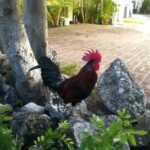 As egg prices reach record highs, more homeowners are turning to backyard chicken farming as a sustainable and cost-effective solution. This surge in prices has led to a growing trend of individuals raising their own chickens to ensure a steady supply of fresh eggs. Kim Pezza is an expert in sustainable living and the author of Backyard Farming: Raising Chickens as well as other books in the Backyard Farming series to help us achieve greater self-sufficiency in our own backyards.
 divides.Shari’s
  Can anyone farm? It doesn’t take large acreage to grow food in your own back yard, next to your restaurant, in a community gardens, school yard, or a small space adding income to an existing small farming operation. Shiv Shakti is founder of Shakti Farm Design in Bend Oregon. He creates sustainable, energy-efficient greenhouses
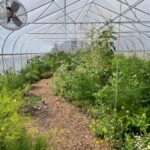 that integrate regenerative agriculture and permaculture principles. Utilizing soil and sun in small spaces with modest investments, almost anyone can farm. shaktifarmdesign.com
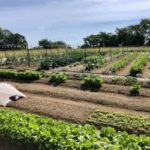 You don’t need to be in the country to farm. It can start on a vacant lot. Three Sisters Gardens’ in West Sacramento is giving back to the community by inspiring and empowering youth through urban farming. Like the Three Sisters legend of companionship planting, Three Sisters Gardens founder Alfred Melbourne believes that communities can heal and thrive when all components, the youth, adults, and elders, work together. The program fosters pride, cultural preservation, and also a deeper connection to Native American heritage. Young leaders become agents of change, promoting access to fresh produce, community well-being, sustainable urban environments and a brighter future. 3sistersgardens.com
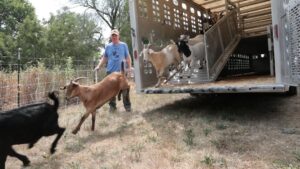 Herbicides can run off, are dangerous to handle, and lead to genetically resistant weeds. Power equipment burns fossil fuel and produces CO2. Goats go where people can’t, eat what most animals won’t, and leave behind nothing but fertilizer. Today goats offer an added enterprise to farms and beginning farmers to capitalize the demand for both targeted grazing and goat meat from the growing population of people from parts of the world where goat meat is preferred.Aaron Steele is the found or of Goats On the Go and the author of the new audio book Goats for Good that is available at www.goatsonthe go.com and available through podcast apps.
 of milk, 14 million pounds of apples, 5.6 million pounds of butter, 3.4 million pounds of pork, , 3 million pounds of beef, 1.2 million pounds of cheese, and 625,000 pounds of blueberries. Mike Maynard is a 2
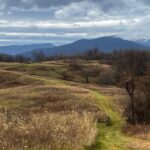 Many dream of moving to the country and some take the steps to make that dream a reality. Paula Whyman had a “crazy” idea to cultivate a small native meadow where wildlife could thrive. Then she set foot on 200 acres of old farmland atop a Virginia mountain and her dream became a reality. In BAD NATURALIST: One Woman’s Ecological Education on a Wild Virginia Mountaintop, Paula Whyman explains how she cares for her mountain-sized ecological restoration challenge and discovered that it’s impossible to be a “good” naturalist.
 The biggest issue threatening the food system now is not climate change. It is the emerging policies to deport undocumented workers that make the wheels turn from fields to processing plants and retail. Gary Nabham is an Agricultural Ecologist,
  improves the soil and improves nutrition. As the word gets out and consumer demand increases for rest0red soil and more nutritious foods, how can the consumer know whether they’re getting the “real thing”? Regenified certification is stepping up to this job says Chief Marketing Officer Kristine Roots. Diestel
 Famiily Ranch turkeys are on that track explains Heidi Diestel. An
 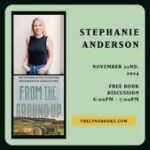 through the food we grow and eat? Stephanie Anderson grew up on a ranch in western South Dakota and is the author of From the Ground Up. With a background in creative nonfiction, a deep understanding of regenerative agriculture, and years of exploring the intersections of equity and sustainability, Stephanie brings a fresh and thought-provoking perspective to our table. Movements start broad and grow in participation and focus creating transformation, reshaping system and inspiring hope in the face of environmental and s0cietal challenges.
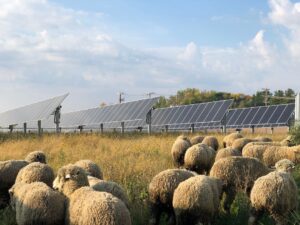 Sunshine makes food farming possible in more ways than one. Emerging farmers can access land and landowners can add solar income through,
  Development. CCCD demonstrates the power of the self-help elements of cooperatives to help new farmers gain viability through cooperative purchasing, sales and product promotion, plus enabling food security in rural as well as urban enclaves through food cooperatives.
  driven approach on every level of global food production. Agriculture-oriented satellite constellations are beginning to provide a critical perspective on the size and condition of nearly everything we grow to eat, nearly every where in the world. With Ukraine still in the news we are bringing back a previous conversation with Vera Petryk who spoke to us from her home in Kyev with optimism for Ukraine and an optimistic view of the future of food on our ‘Blue Dot’.
 gases in the environment, if Ag follows a report prepared by leading scientists, reviewed by CAST (Center for Ag Science and Technology) and published by the US Farmers and Ranchers In Action. Dr.Marty Matlock, University of Arkansas and leading author of the repot explains how combining reduced greenhouse gas (GHG) emissions with increased carbon sequestration will achieve GHG-negative agriculture in five areas offering the most significant opportunities to offset Ag’s roughly 10% of U.S. greenhouse gas emissions: soil carbon management, nitrogen fertilizer management, animal production and management, crop yield gap, and efficient energy use.
 To protect public health, the FDA’s
 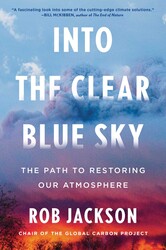 gotten as much attention as it needs. Rob Jackson is the Chair of the Global Carbon Project, a Senior Fellow at Stanford’s Woods Institute for the Environment and Precourt Institute for Energy, and a professor of earth science at Stanford University. His book “The Clear Blue Sky” shows a bipartsan path hat can make needed change in decades rather than centuries. www.tintotheclearbluesky.com
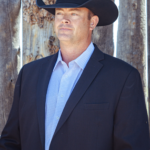 Smith are the co-founders of Colorado Craft Beef, a company rooted in a multi-generational ranching legacy. Over the years, they’ve built a vertically integrated, direct-to-consumer beef company that not only provides high-quality beef products but also connects people with agriculture, dispels common myths, and promotes pride in how we feed our families. Jeff Smith challenges old industry standards to generate new mindsets and value-added partnerships from ranch to table. www.coloradocraftbeef.com
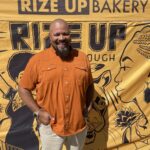 Happiness can be found on the way from farm to table where we break bread together. Ezekiwee Anderson discovered happiness baking very special bread that led to Rize Up Sourdough.
 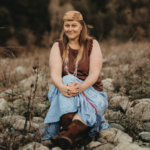 An indigenous way of being may be just what the world needs – starting with an indigenous view of food. Decolonizing our diets will lead to an expansive palate that creates a relationship with traditional, seasonal, everyday foods. Karuk tribe member Sara Calvosa Olson is a food writer and editor living in the Bay Area with her husband and
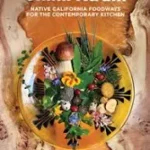 two sons. Her work dwells at the intersection of storytelling, Indigenous food systems, security, sovereignty, reconnection, and recipe development. ChimiNu’am is her book of Native California foodways for the contemporary kitchen.
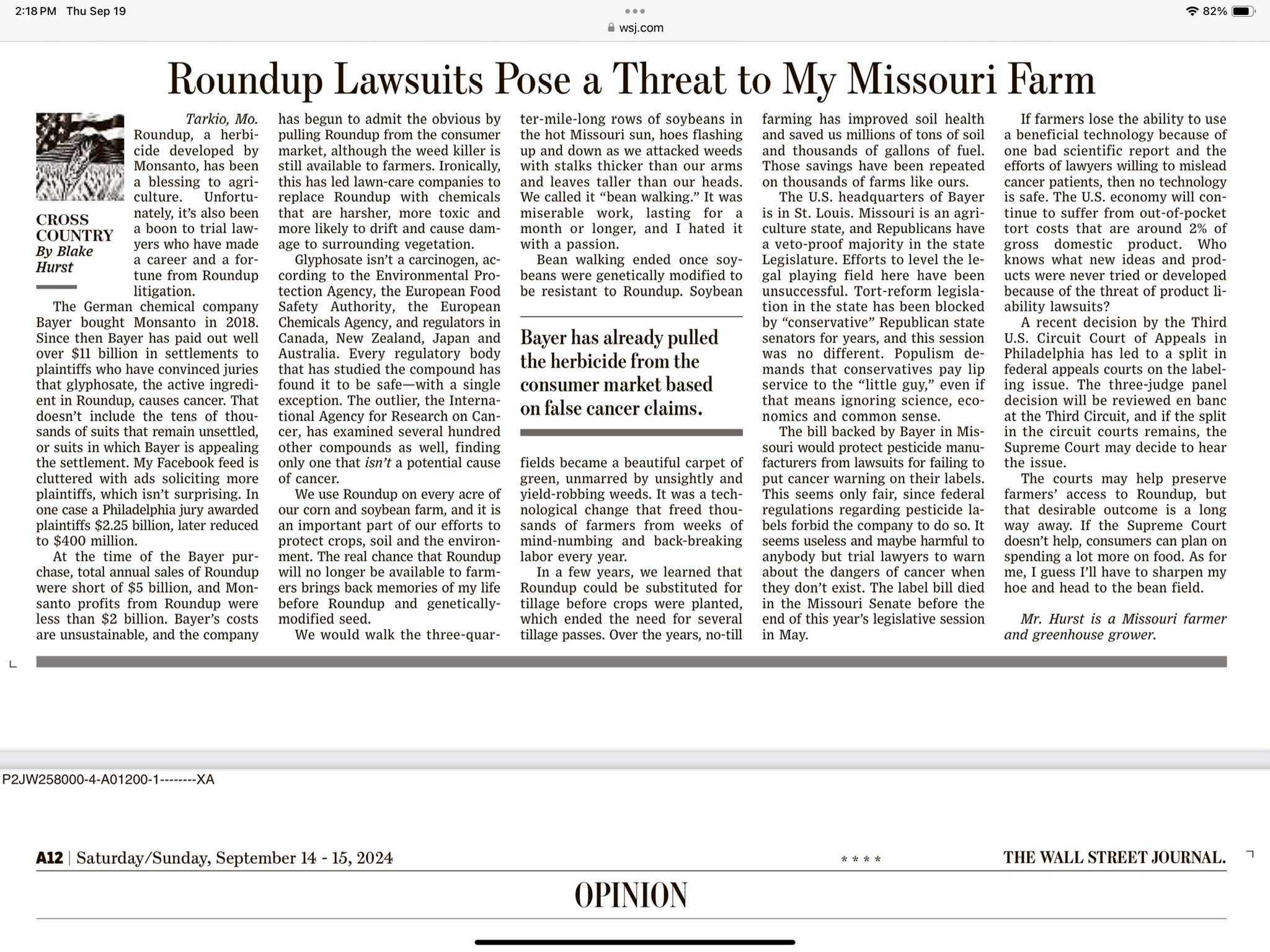
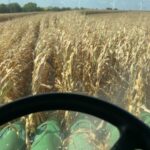 of lawsuits against Monsanto and now Bayer. Are we “headed to the last roundup” as go the lyrics to an ancient cowboy tune by Gene Autry? Missouri farmer Blake Hurst is the author of an editorial in the Wall
 Cats and dogs should watch out for hungry immigrants according to recent political propaganda. Truth is that immigration is a necessity in the country and not a reason to keep our pets locked indoors. Farm To Table Talk returns with this podcast from earlier this year to remind us that immigration is essential for a functioning food system According to Steve Hubbard of the American Immigration Council, the H-2A Temporary Agriculture Worker Program allows U.S. employers that face a shortage of domestic workers to hire foreign nationals for temporary or seasonal agricultural jobs. Foreign help is being sought from over two-thirds of the counties in the U.S.

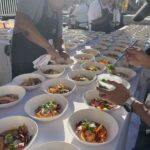 Sacramento and Farm To Table Talk’s Rodger Wasson is on the Bridge at the dinner with Visit Sacramento’s CEO, Mike Testa and two of the featured Chefs: Brock MacDonald of Beast & Bounty and Cecil Rhoodes II of Nash and Proper. The 2024 Tower Bridge Dinner was a solid start to the Annual Farm To Fork Festival and perhaps an invitation to other parts of the country to challenge Sacramento for the title of Farm To Fork Capital.
 a changing world. Since 2001, the Cornell Small Farms Program has fostered programs that support and encourage the sustainability of diverse, thriving small farms. Cornell Small Farm Program’s Eric Frenay is able to walk the talk as a small farmer herself who sees the challenges and real progress. www.smallfarms.cornell.edu
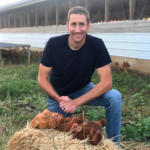 heritage chickens are being grown on family farms to the highest animal welfare standards- freely roaming pastures at a slower pace. Mike Charles is a 6th generation farmer and the founder and CEO of
  retailers, such as full-line grocery stores, supermarkets and club warehouse stores, to notify their customers of the source of certain foods; including muscle cut and ground meats: lamb, goat, and chicken; wild and farm-raised fish and shellfish; fresh and frozen fruits and vegetables;
 peanuts, pecans, and macadamia nuts; and ginseng. Dr. Alexandria Fischer is with the Research and Rulemaking Branch of the USDA’s Agriculutural Marketing Service that administers COOL@usda.gov .
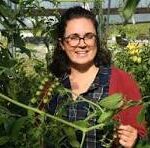 Even when summer is over, the season peak flavor and nutrition in tomatoes is available all year long in cans or jars. Lycopene, the antioxidant compound that makes tomatoes red, is even more available in tomatoes that have been turned in to tomato products and has been shown to be protective for diseases from cardiovasular to cancers. What if it is more than just the lycopene in the tomatoes that make a difference. That is the question being pursued at the The Ohio State University by Dr. Jessica Coooperstone’s Lab where positive protections have been found from tomatoes with or without lycopene. Just when it seems that the tomato story can’t get any better, we learn about the role “Alpha Tomatine” and the potential of making a great product better. Jessica Cooperstone is Associate Professor in the department of Horticulture and Crop Science and the department of Food Science & Technology . www. CooperstoneLab.com
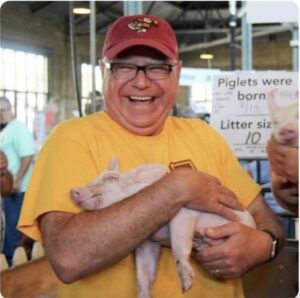 Agriculture (USDA) to put $20 billion toward soil health. By fusing journalistic expose’ with deeply personal stories from people on the front lines of the food movement. The film Common Ground shows the power that farmers and eaters have to save a broken food system. Josh Tickell joins the Farm To Table Talk table to talk about alternative “regenerative” models of agriculture that will balance the climate, save our health and stabilize America’s economy – before it’s too late. In the 2024 election its encouraging to see candidates like Tim Walz boasting of their farm roots. Let’s push for finding our common ground.
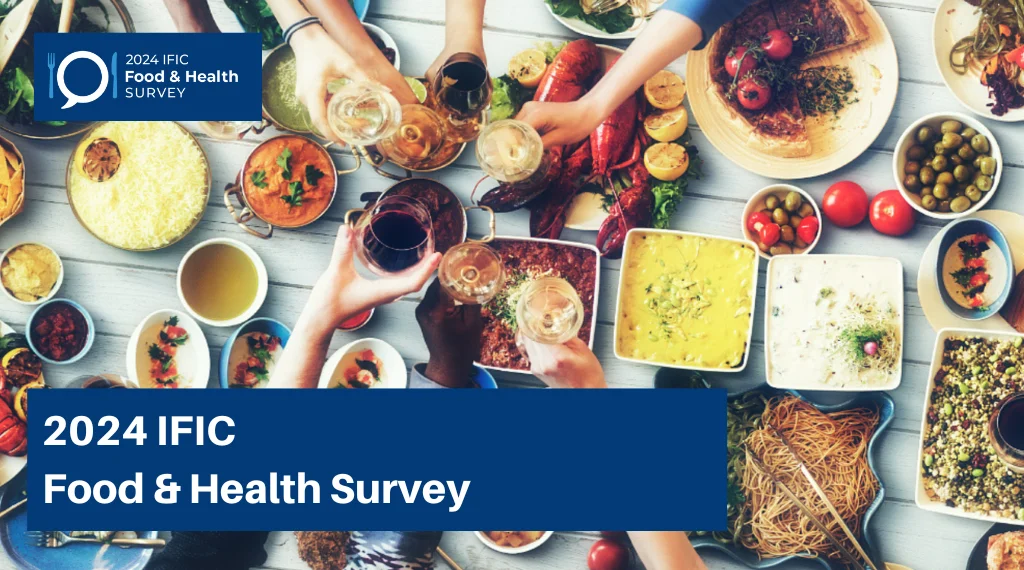 In food purchase priorities, somethings change a lot and some barely change at all. When it comes to food purchases the top considerations are still taste, price, health and convenience. What’s new and rising on the list is “Environmental Sustainability”, now an important consideration for about 30% of the population. These findings are in the Annual Food & Health Survey of IFIC the Internaional Food Information Council. Kris Solid, RD is the Research Senior Director for IFIC. To fill gaps in consumer knowledge about food it’s important to identifiy current perceptions, beliefs and behavious. www.foodinsight.org
 www.americanimmigrationcouncil.org
 What we eat today and tomorrow is linkng through restaurants and institutions under the direction of Chefs who are learning the importance of knowing the farm source and sharing that knowledge with customers. With over 6,000 students, Chef Kirk Bachmann is President Provost of Auguste Escoffier School of Culinary Arts, the largest culinary institution in the U.S.. (
 the right sources that are faming, packing and shipping the right way. Christopher Safieh is the Head of Growth at Guatemala based UniSpice, a world leader in growing, packing and shipping produce to global customers. www.unispice.com
 that ranges from wide open to strategically controlled. Jake Felser of Freight Farms shared an important perspective on how controlled environment farming can check several boxes when he first joined the Farm To Table Talk in 2022.. www.freightfarms.com
 nature wants –“attend to Earth”. Try as we might, you won’t be the savior of the world but you can do what you are here to do. This will take some down the road to regeneration (mob, mow and move), or beyond. Daniel Firth Griffith has a 400 acre rewilding project in central Virginia and has published “Stagline”, a book about transition from regneration on to a Kenetic rewilding from cropland to pastures, to forests and plates. www.wildtimshel.com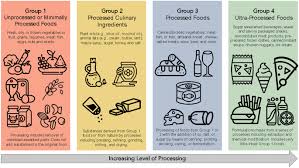
 distilling California Agave Spirits and is representative of progressive distillers who see a promising future for California’s newest crop, a great spirit.
 points of view. Why is establishing the right path so confusing? Amy Myrdal Miller is a registered dietitian, North Dakota farmer’s daughter and co-author of Cooking a la Heart. https://www.farmersdaughterconsulting.com
 More money is spent lobbying the Farm Bill than is spent lobbying for America’s Defense industry. It’s not just about producing food. Over 80% of the farm bill is for nutrition programs, such as SNAP, Supplemental Nutrition Assistance Program. The bulk of the lobbying investments are made by AgriBusiness that sells inputs to farmers and the grocery industry who benefit from food assistance purchases. Even the farm focused programs (research, exports, conservation, etc) mostly support products used for fuel, animal feed and sweeteners. These include important programs to help real farmers produce real food, but not enough. Ricardo Salvador is the Director of Food and Environmental Programs with the Union of Concerned Scientists. www.ucusa.org
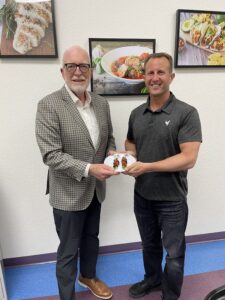 The demand for meat will keep growing because the world’s population will keep growing out of poverty and with a hunger to add meat to their diet. Now more meat can come from more sources , including animal, plants and mycoprotein. Paul Shapiro is CEO of the Better Meat Company and author of “Clean Meat”. Growing micycrobial fungi called “mycoprotein”, meat is produced with the look, taste and texture of animal sourced products with equal or superior nutrition. Who knew we could be farming microbes to help feed a hungry planet. www.bettermeat.co
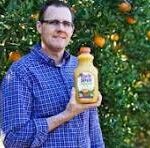 A successful consumer brand can be built from the farm while prioritizing community well-being. Organic style farming existed long before chemical intensive farming became the norm. Four generations of Matt Mclean’s family were citrus farmers in Florida, beginning before federal organic certification became a law. Recognizing growing demand ,
 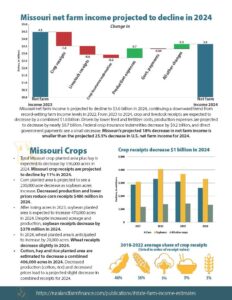 Missouri’s Rural and Farm Finance Policy Analysis Center (RaFF). Projections from the report suggest that declining market receipts and lower crop prices play a role in the estimated $0.8 billion decrease in net farm income says Scott Brown, interim director of the center.
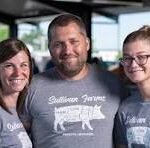 The new ways of raising livestock and meat production are increasingly drawing from old ways when pastures were more prevalent than large metal confinement buildings. Brittany and Bill Sullivan own and operate Sullivan Farms, just outside of Fayette, MO. Their primary business is pork. All their pigs are raised and rotated on fresh regenerative pastures, and fed NON-GMO grain, along with organic milk. They believe a highly quality of life for animals insures terrific, nutritious food on our
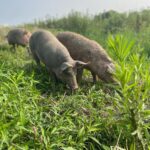 dinner tables. Selling to restaurants, butcher shops, at the farmers markets, and grocery stores.they have discovered there is a market for livestock produced on pasture an that you don’t have to be a giant CAFO, concentrated animal feeding operation.
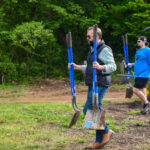 CEO and founder of the Carolina Farm Trust. Based in Charlotte, North Carolina, he’s now driving change to improve access to affordable, healthy foods. The first stage is to open a distribution and food production center in west Charlotte, an area known as a food desert. The project includes working with farmers to get food from the farm to the tables, partnering with local chefs in the community and helping to build urban farms. carolinafarm.org.
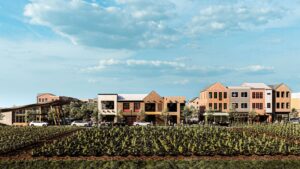 Cities keep growing but that doesn’t mean we don’t want to be around a farm. In fact when you can’t live in the country then how about bringing the farm to the city? That’s what Clayton Garrett shares is happening in Houston and other cities. It may be surprising to farmers who have experienced mixed results when city folks move to the country and become their neighbors. Clayton Garrett is a farmer and founding partner of Meristem Communities, a Houston based real estate development company exploring how healthy communities are developed and nourished, often with farming in its midst. indigocommons.com
 with a different podcast. We’re sorry about that and just in case here is the real interview with Austin Frerick. Rodger Wasson
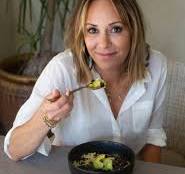 Knowing what we’re really hungry for depends on becoming the authority in our own body, empowering us to eat what we love .
 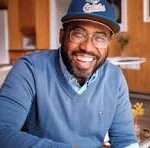 Houses of faith are becoming powerful agents and actors of improving food security in their own community in ways that go beyond charity. It is organizing the hungry and not just feeding the needy.The largest institution in the Black community, the Black church, replete with offerings to fill multiple needs., from the physical grounds, to classrooms, kitchens, to church vans and buses, to the land, and the people. Pastor Heber Brown III, launched the Black Church Food Security Network (BCFSN) in 2014 with a garden at his own church, Pleasant Hope Baptist Church in Baltimore, now they have 250 in the network. BCFN was founded after he noticed a pattern of hospitalizations related to diet and other issues and was determined to change health outcomes for his congregation. What began with encouraging churches to start gardens on church premises, has since grown to include encouraging congregations to make institutional purchases from Black farmers, host farmers markets, preferably on Sundays after church, and arrange tours of Black farms.
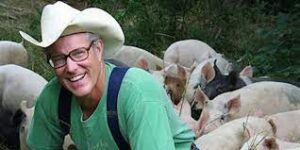 Farmers have the support of customers who want to be a part of something sacred, noble, righteous and healing. Joel Salatin has experienced that first hand and has helped thousands of farmers all over the world discover it for themselves. Although it is daunting to start farming and encourage a more viable local food system, it is happening because of those connections. Joel Salatin hears all about it and shares the excitement he’s discovered at his farm, on the road speaking and in his latest of 16 books, Homestead Tsunami. In 2006 Another author, Michael Pollan, featured Joel in a key chapter of Omnivore’s Dilemna titled All Flesh Is Grass.. When critics of the modern American food system are challenged to offer a better way the answer is often Joel Saltin’s family’s Polyface Farm. www.polyface.com
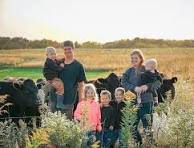 become profitable all while not having to sacrifice everything. Rachelle is also a business and mindset coach and founder of The Mindful Farmers focusing on teaching farmers how to build a profitable farm, stop overworking, and finally feel in control. info@wholesomefamilyfarms.com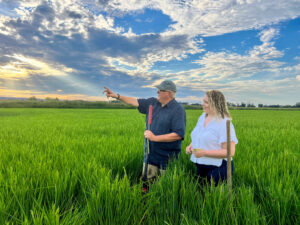
 The cause of climate change is not animals or fossil fuel. It is how we manage all resources and we can start with grasslands of the world. Allan Savory, the founder of the Savory Institute, is a renowned ecologist and pioneer in holistic land management. His work focuses on regenerating degraded landscapes through innovative practices that integrate livestock grazing with sustainable land stewardship. His holistic approach aims to restore ecosystems, combat desertification, and address global challenges related to food production and climate change. Alan Savory joins Farm To Table Talk to explore groundbreaking
 Since good food is good medicine, it makes sense for Hospitals to source protein and produce from healthy soils as close by as possible. At UC Davis Health the food landscape has been transitioning into a true
  for farmers. Regenerative agriculture can be the foundation for all the food label systems. Dr. Cindy Daly is the Executive Director of the Center for Regenerative Agriculture & Resilient Systems at California State University, Chico. Tim LaSalle is with Cindy at Eco Farm. www.csuchico.edu/regenerativeagriculture/
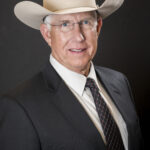 Successfully growing crops or livestock is a lonely enterprise without some help. In many industries that help in the form of research, education and promotion is funded by a state or federal checkoff. While everyone must financially support this work, too few people step up to volunteer their time and judgement to plan and oversee the work done for the benefit of all. One of those who has stepped up is Jimmy Taylor a cattle rancher from Oklahoma and a member of the Beef Promotion Operating Committee where he has been the
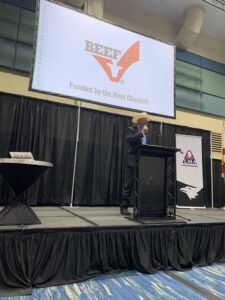 Chairman of the Cattlemen’s Beef Board. Farmers and ranchers should take their turn at stepping up to give back to the industry that has done so much for them. It’s time to lead on Ranch to Table Talk.
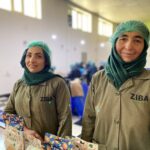 farms and Coops to process and export dried fruits and nuts with mostly women in the plant in Kabul is a challenge worth tackling. American farmers who sometimes complain about farming under USDA regulations might expect different chalenges if their government partner was the Taliban. www.zibafoods.com
 communities better. For over 100 years, University of California Agriculture and Natural Resources (UC ANR) advisors, specialists, faculty, and staff have been committed to the better health and well-being of communities. Amira Resnick is the California Director of Community Nutrition and Health, a statewide network of researchers and educators promoting healthy and equitable communities. The goal is to co-create public education and partner training, programming and collaboration with local organizations and community leaders to advance community health . Succesful collaborations create changes in individual behavior, leadership capacity building, organizations, public policy, and systems. www. EFNP.UCANR.edu
 difference, a BioGas cooperative. www.cowpowr.com
 COP 28 was widely expected to call for drastic reduction of meat consumption in Western Nations. That didn’t happen! Instead it was decided that the world needs to scale up productivity growth of livestock, implementing best practices around the world. “Livestock plays a crucial economic role ….high quality protein …essential for good health”. Eric Mittenthal, the Chief Strategy Officer of the American Meat Institute was in Doha with TheProteinPact.org as discussions considered country level policies that center food as a climate solution and a way to mitigate the climate crisis. Livestock farming and meat consumption have a positive role in that mission. www.theproteinpact.org
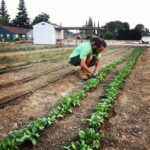 to grow high quality seasonal vegetables for local urban communities. It’s a mission of We Grow Farms and the Ujamaa Farmer Collective to grow food regeneratively, ensure secure land tenure and promote equitable access to resources for historically underserved farmers of color. Nelson Hawkins is featured at Eco Farm and Farm To Table Talk to share
 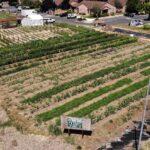 the story of how Sacramento urban farmer natives are making a difference for themselves, their community and other aspiring farmers. #EcoFarm2024
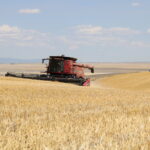 Many segments of Agriculture are experiencing changes to increased focus on regenerative, sustainable, more earth friendly farming practices. Although farmers usually prioritize doing what is best for their soil, today’s changes are being hastened by major food companies such as Mars and WalMart requiring confirmation of the practices that
 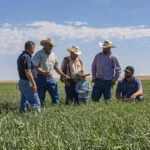 their consumers are increasingly expecting. Jeff Van Pevenage is the President at CEO of Portland based Columbia Grain International where the mission is to nourish the world safely by supporting producers and customers in an evolving Ag landscape. www.columbiagrain.com
 The peak of freshness is often best achieved by freezing. The advances in freezing technologies is allowing consumers to enjoy breeds, varieties, climate friendly production practices and geographical differences in food products both at their favorite store and direct to their door from farmers around the world. Ruben Cortez and Wesley O’Brien, co-founders of Frozen Logistics are empowering farmers, particularly small-scale and local producers, by offering them a direct channel to reach consumers. This includes increased revenue for farmers, cost savings for consumers, and the convenience of purchasing directly with cold chain management, stringent quality control, eco-friendly packaging and efficient transportation. www.frozenlogistics.com
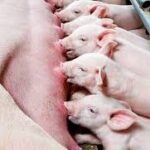 pigs each per year. A pig is is born about every minute of every day and Cheryl still finds time to explain how and why pigs are raised the way they are today. www.ilpork.com
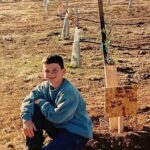 What if every time you dig into ice cream, you could be supporting the next movement of farming, positively changing our planet for a better future: removing harmful carbon from our air; creating water-retaining soil; building biodiverse and nutrient-rich topsoil. Alec Jaffe taught himself to make ice cream in elementary school for a school project and grew up exploring his relatives’ sustainable farmland. He didn’t realize how defining those childhood moments would be until he was an uninspired and unsatisfied adult perusing pints in the freezer aisle. He knew we could do better so he perfected his signature recipe and set out to source the best earth friendly ingredients. The result is Alec’s Ice Cream a first-ever regenerative organic ice cream—improving the world through the way it’s created and through the smiles that it creates in turn. www.alecsicecream.com
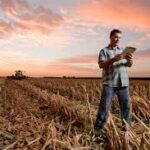 Keeping family farms viable will require higher technology and diversification that goes beyond past experience. Tomorrow’s farmers may need to learn robotics or global trend analysis and how to create non-traditional income streams, outside of agriculture. Dino Giacomazzi considers these options as he reflects on his experience that started on a Central Valley California Dairy to global music touring and Bay Area high tech before returning to the farm where it was necessary to shift from dairy to almonds. Now he sees even more changes ahead if his own children decide to continue the family farm.
 If we can’t bring the city to the farm, bring the farm to the city. That’s what Organic farmers did during Climate Week. Right in Rockefeller Center a pop up farm was created complete with tractor, barn, cows (sort of) and real farmers, including Ohio dairy farmer Jordan Settlage. Since the US is losing 100,00 family farms each decade it’s time to not just tell consumers where their food comes from but how we all need to protect where their food is coming from. www.organicvalley.com
 sometimes allowing consumers to see precisely where their food purchase came from and how it was produced. Eric Seymour, VP of Channel Programs with www.meandu.com sees restaurant owners banking on technology and consumers welcoming smart tech personalization that could include taking diners on a virtual trip to the origin of their orders.
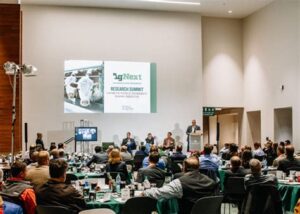 State University where Dr. Sara Place is a Professor of Feedlot Systems. www.agnext.colostate.edu
 also unpacks various myths about farming. Farmer grant nominations will begin on National Farmer’s Day and a review board will select farmers who will receive the grants.
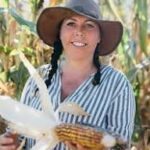 says Chef and farmer Mollie Englehart. Rather than wait for a government agency to fix what’s wrong, consumers make the vote that counts when they purchase food grown right from farms or restaurants they can trust. Raised on a small farm in New York state there was college, music, poetry and restaurant transitions before Mollie became a farmer closing the loop –recycling wasted food from the restaurant kitchens to their own LA area farms for compost producing rich soil and more food grown to return to the restaurant kitchens. Building community, growing sustainable food, practicing regenerative agriculture and cultivating new ways of thinking is now extending from California to Texas where regenerative ranch life is being shared in the heart of Hill country.
 with good farming. He set out from France for Northern California to build a company from scratch taking high-quality walnuts, drying them, and then toasting them in custom-made, French cast-iron kettles before pressing them to extract pure, “virgin” oil. At the time walnut oils available in the United States were overly heavy or diluted with cheaper oil. Consumers took to La Tourangelle’s trich tasting, artisan oil full of “good-for-you” omega-3 fatty acids. From the farm to our tables, byproducts of well grown produce such as non vegetable virgin oils offer flavor, nutrition and climate smart production for consumers who care more than ever. www.latourangelle.com
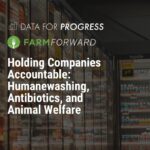 expectations for meat labeling, support for transparency and regulation of meat industry marketing around issues like antibiotic usage, and the extent to which marketing misleads the public. www.foodforward.com
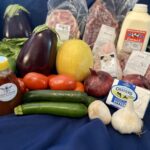 The multi farm CSA model is open for anyone including individuals with a love for local food but do not farm, farmers that are looking to increase revenue and customers, or co-ops of farms. Field to Fork Tehama, LLC is a multi-farm CSA that provides members with a weekly box filled with vegetables, fruit and protein that are currently in season. www.fieldtoforkca.com
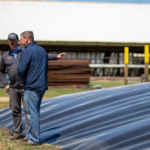 Reducing methane reduces warming. Methane is nothing more than energy that instead of off-gasing in to the atmosphere can be captured to use for transportation and other benefits–converting a liability into a utility. Livestock, not only cattle, contribute to methane off-gasing now but less in the future when as a result terperatures will be go down. Technologies and new research are providing the new solutions ranging from methane digesters on farm manure holding lagoons and non-gmo genetics to breed low methane animals. At the center of these develoopments is Clear Center at UC Davis, under the direction of Dr. Frank Mithourner who joins Farm To Table Talk to shares the learned facts and promise of better climate future. www.clear.uc.davis.edu
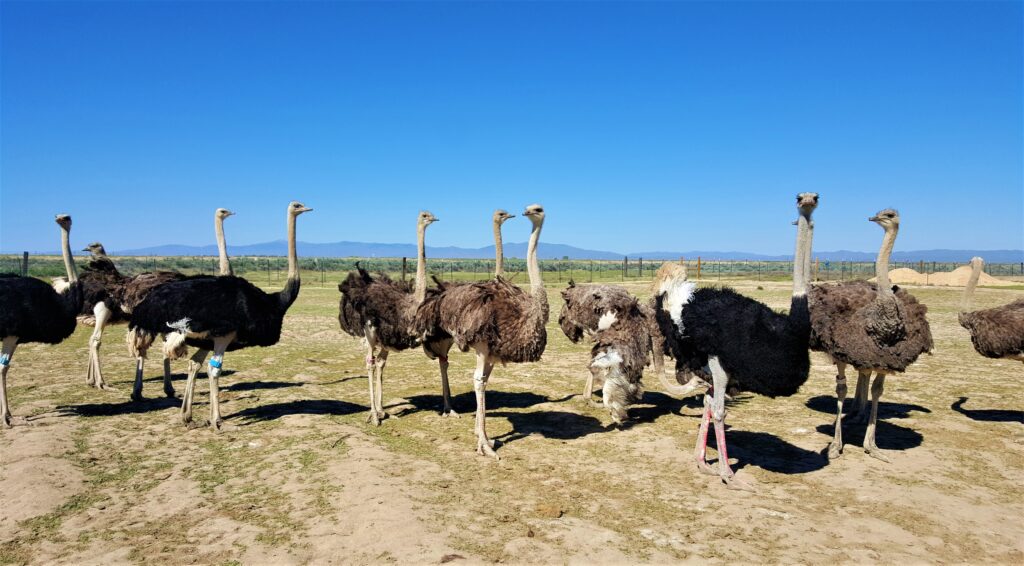 As radical weather continues, Earth friendly protein may increasingly be found on shopping lists and menu plans. If the taste and nutrition of bovine products without concerns over the potent Green House Gas methane is a priority, Ostrich will earn a try. Alexander McCoy discovered Ostrich when he was working in Africa and preparing for an iron man competition. He loved it and ran his best time. Back home in Idaho he couldn’t find ostrich for Christmas dinner for his family, so after also becoming sold on the taste and nutrition of ostrich, he decided to change careers and produce ostrich–American Ostrich Farms. www.americanostrichfarms.com
 food aisles in response to consumer demand. Neutral Foods debuted nationally in 2021 with organic whole and 2% milk products that are now available in more than 2,000 grocery stores from coast to coast. They partner with family farms that join the climate change fight with innovative on-farm projects. eatneutral.com
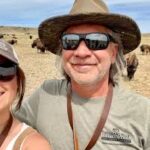 The true cost and true value of food should consider more than just price and yields. Saving our food systems from collapse will need smaller farms, regenerative practices, multiple species and strong enough markets says Matt Maier the chief farmer/owner of Thousand Hills Lifetime Grazed 100% Grassfed Beef. Nourishing soil, plants, cattle and people begins with producers ranging from Oklahoma to Minnesota who have shared views of leaving the land better. Matt Maier saw that the welcome chaos of nature
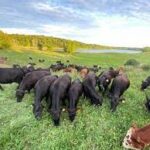 has disappeared from too much of today’s farms and ranches. Their regenerative venture with product available in all 50 states is allowing consumers to vote with their dollars for authentic regenerative practices. https://thousandhillslifetimegrazed.com/our-story/
 shrimp? Shrimp is a popular food but travels a long way to the table, changes hands frequently, is frozen and thawed repeatedly and likely has been raised in less than ideal circumstance. Steve Sutton had a vision of a better way as he learned shrimp farming in Asia before establishing Transparent Sea to grow shrimp for local, particular customers. The first facility is in a warehouse in Los Angles that receives hundreds of thousands of baby shrimp that are grown out to sell as prawns to local restaurants and stores. Shrimp are consumed everywhere so why not grow them everywhere? When you dream of having a small farm, maybe you should think small, with shrimp, anywhere. www.transparentsea.com
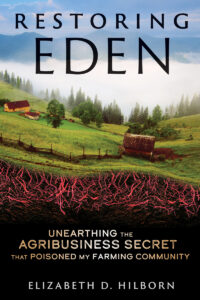 Over 60 years ago Rachel Carson warned of “Silent Spring (s)” to come from the harms of indiscriminate use of pesticides. Since then the threatening big picture has broadened to position the Earth in the current period of the Sixth Extinction. Extinctions are gradual but silence can be sudden as it seemed to honey bee veterinarian Elizabeth Hilborn who had to solve a mystery of what killed animals on her North Carolina farm. When she identified the cause, solutions and hopeful signs, it led to writing a book with a message:Restoring Eden.
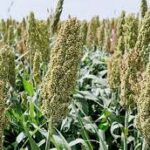 climate change. Sorghum is an ancient grain that is hearty, resilient and drought tolerant, needing about one third the water of other grain crops. Nate Blum is the head of Sorghum United, a voluntary organization devoted to research and promotion of this under utilized crop. Sorghum’s role in climate change mitigation: given its inherent drought and heat tolerance, sorghum can significantly contribute to easing the impact of climate change on global food security. For consumers this very ancient grain addresses many modern concerns from non-GMO to Gluten Free. And farmers may find that with their climate traditions shifting to new territory, it’s time for a change.
 Regenerative small and mid-size livestock producers are beginning to see potential solutions to their marketing problems. Direct sales are happening on line, at Farmers Markets and to Restaurants but the links to larger institutions where there is need for grinding, braising and stew meats in large quantities is lacking. These are exactly the cuts that small to mid size ranches have trouble marketing so instead they accumulate in their freezers. Michael Dimock, the President of Roots of Change, sees this changing as work begins with the USDA, CA Department of Food and Ag and the University of California System (that feeds up to 600,000 people a day). Ultimately the sufficient quantities of product will be pooled to supply large institutions with regenerative locally produced meat as an alternative to product that may currently be sourced and blended from an assortment of countries on other continents. www.rootsofchange.org
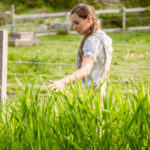 Siri Says that homesteading is a life style of self sufficiency. Siri has her opinion but others see much more. The motivation to pursue homesteading is often hatched by restless folks who are tired of being cooped up inside, staring at a computer screen when they want to get outside and grow something for their personal and family well-being. Angela Ferraro-Fanning is a self-taught first-generation farmer who built Axe & Root Homestead, a six-acre farm in central New Jersey. After the birth of her first child, she realized she wanted to be outdoors, aligning her life with the seasons and with nature. She now grows and preserves her own homegrown produce for her young family and runs a farm bustling with Clydesdales, geese and ducks for eggs, an apiary with ten beehives, sheep, and a small orchard. She shares this love for eco-conscious, self-sufficient living with others through social media as @axeandroothomestead, her books (most recently The Sustainable Homestead) and online homesteading classes, interviews and public speaking.
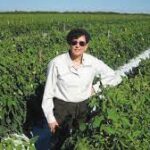 system. The little ‘things’ that make a huge difference in carbon sequestration, reduced nitrogen needs and even human health are trillions of microbes under our every step. With artificial intelligence and big data the day is arriving when the soil health micro-biome short comings can be addressed with a critical microbe from any where in the world. This dynamic parallels the frontier in humans as we learn how to feed our guts with what we need. This is a world that has long fascinated Pam Marrone has she pursued research and launched successful business. Now with her latest venture, the Invasive Species Corporation, Pam gives a Farm To Table Talk a peak of the magic underfoot.
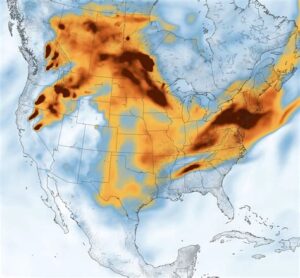 Smoke, fires and climate are a growing issue world wide, seriously impacting food systems and health spans. For our crops or for our health, there is more recognition that something must be done. One of the youngest County Supervisors in the US, Jaron Brandon sees this as an opportunity to step up, especially if it is not your normal routine. At a conference of the University of California Ag and Natural Resources (UCANR) Brandon identifies the growing problem and the chance for individuals and their local, state and federal governments to make a difference. Research and education will find ways to utilize make creative use of forest sourced biomass for new products and even hydrogen fuels. Beyond damaging our lungs the extremely intense fires are even killing the microbiome and limiting the options for nature to return to what it wants to be again.
 The world demand for milk, meat and eggs is projected to increase by over 50% to sustain a global population of 9 billion, despite vocal critics calling for reductions. As in the past, new ideas and technologies will play a roll in achieving that progress. Caleb Wilkins, is the CEO and Co-founder of Regenerative Agriculture where new concepts such
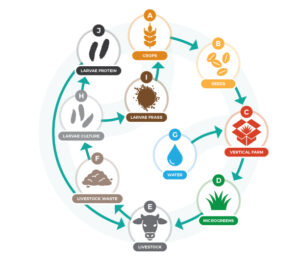 as PastureBox are advancing to supplement traditional systems that could lead to a future where consumers will have adequate supplies of food within a hundred miles of where they live. www.renaissanceag.com
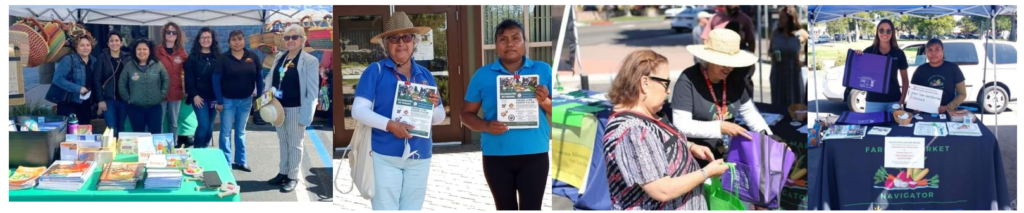 Communities are discovering that they can make their part of the world work better for themselves and better for the planet. The Danone Institute of North America (DINA) is fostering that progress with grants for, community-based work that promotes sustainable food systems in local communities. Dr. Leslie Lytle, President of the Board and Adjunct Professor at the Gillings School of Global Public Health at the University of North Carolina joins Farm To Table Talk to explain how and why this happens. https://www.danoneinstitutena.org
 Rural residents can have high rates of depression, substance abuse and completed suicide, and farmers face additional challenges to maintaining their mental health according to Farm Aid. Mental health professionals point to the nature of farming as one likely cause — it is a business largely influenced by factors that are beyond farmers’ control, including weather, disease, pests, prices and interest rates, and which can come and go without warning. They can be isolated, geographically and socially, since they often work alone. They are self-reliant, independent and can be unlikely to ask for help. For over 30 years Farm Aid has offered a place to call for help and suggestions through the Farm Aid Hotline. Now as we learn in a Farm To Table Talk conversation with Farm Aid’s Hotline Program Manager Caitlin Arnold Stephano they are also able to offer hotlne services in Spanish. When starting or surviving on the farm becomes an existential threat, all farmers can call the hotline at 1-800-FARM-AID (1-800-327-6243).
 Justice Neil Gorsuch in an explanation of the Supreme Court decision to affirm the California law banning the in-state sale of “certain pork products derived from breeding pigs confined in stalls so small they cannot lie down, stand up, or turn around” stated that “while the Constitution addresses many weighty issues, the type of pork chops California merchants may sell is not on that list.” The decision has implications far beyond the cost of pork in California. Dan Sumner, Ag Econ Professor at UC Davis; Gene Baur, President and Co-Founder of Farm Sanctuary; and Michael Olson of the Food Chain Radio and Metro Farm join Farm To Table Talk host Rodger Wasson to explore what this decision could mean to consumers, the future of the North American food system and the United States.
 Brett Ellis is living proof of that fact with a career that has had him in the kitchen and the farm from the French Laundry in California to Husky Meadows Farm in Connecticut. Husky Meadows Farm capitalizes on Brett’s farm for the kitchen talents in Seed & Spoon, a weekend culinary experience in Norfolk, Connecticut. Farming chef Brett values the connection between
  farmers and cooks and embraces the fact that everyone can grow, prepare and eat delicious food. www.huskymeadowsfarm.com
 Collaboration and communication are community building tools of Cooperative Extension where modern engagement goes way beyond kids, cows, sows and plows. Communities sense and seek a better future but struggle to succeed without collaboration that can tap in to new scientific and human resources. Extension is stepping up. Dr. Brent Hales, brings proven experience to the University of California Ag and Natural Resources to the position of associate vice president of for research and cooperative extension to strengthen partnership, build trust, address challenges and define a 2040 strategic vision. www.ucanr.edu
 disease and makes health impossible. Part of the social milieu that is impacting the body also includes the soil and includes how we treat the Earth and how we treat ourselves in the way we work with the Earth. Global transformation will need recognition that farming is medicine for the health of all life and of earth itself. That is a message shared at an Eco Farm conference, a Farm To Table Talk podcast and in the book Inflamed: Deep Medicine and the Anatomy of Injustice by Dr. Rupa Marya: physician, writer, musician, mother, farmer\’s wife and Associate Professor of Medicine at UC San Francisco. In addition to her extensive engagement in support of indigenous communities, she is the lead singer and composer of a globe circling band, Rupa and the April Fishes.
  The generally acknowledged number one diet today is the Mediterranean Diet but it’s not easy for most people to stay with it day in and day out. A supplemental solution is on hand when three of the healthiest core ingredients of a Mediterranean Diet: olives, grapes and tomatoes are extracted to create a Mediterranean Supplement.
  Over 125 new farm ‘spokes’ are being established in New England around the Azuluna Farms hub. It’s a model that could be replicated where new farmers are needed when current farmers are aging out and scale required today puts farming out of reach for most who would love to jump in. Ken Rapoport is co-founder and farmer at
  health, and community wellness. Azuluna’s regenerative farming network also makes higher quality, locally sourced/raised foods available to those who are trying to eat more sustainably. Ken and Nick Miniter, Azuluna’s Director of Ag Operations takes us from Spokes to Hub to Tables.
 Nature can solve problems for people although people created most of nature’s problems in the first place, beginning 10,000 years ago. Tim LaSalle of the Center for Regenerative Agriculture and Resilient Systems at Chico State is spearheading a project on implementing regenerative practices to improve soil and water utilization on farm land near the Colorado River in Blythe California. With support from the LA based Metropolitan Water District priority is being given to truly nature based solutions that will have climate and economic implications world wide. It begins with a respect for how nature cured itself in times before chemicals and tillage.
 bring a high-caliber farm-to-table restaurant to small-town rural Ohio.
 changed, maybe permanently and our Farm To Table Talk story begins with Blake meeting Carlos and Juan at the Kansas City airport arriving from Guadalajara. https://blake8dd.substack.com/
 Food tells what makes us tick. From farm to table it is the deep and meaningful connector to everyone. Chef Stephanie White has come to that philosophy with a journey from a New England organic farm to professional kitchens in a variety of roles in different types of establishments, including small businesses, pop-ups, high-end catering, high-volume cookery, and farm to table restaurants. A Chef Instructor with the Auguste Escoffier School of Culinary Arts, Chef Stephanie has designed curriculum, taught, and catered for a teaching kitchen located on Turner Farms in Cincinnati, Ohio, educating the local community to use local, seasonal ingredients. Chef/students are helped to find their passion for seasonal and plant-based eating, sustainable practices, ending food insecurity, the role of self-care in the culinary industry, food as medicine, local food sourcing and being a food connector. www.escoffier.edu
 The result is not only healthier and more productive land, but a more resilient food system that can withstand the impacts of climate change, and a more sustainable future for generations to come.
 has worked as a cowboy and a rancher for decades, but now calls himself a land steward and herdsman. At White Oak Pastures in SouthWest Georgia, over 150 employees work together to raise, process, and ship meat from 10 species of livestock to loyal customers. And while they are proud of the grassfed and pasture-raised meats that they sell,
  their business centers around one central goal: regenerate the land. As White Oak Pastures moved toward regenerative agriculture, they acquired nearby farmland and grew from 1,000 acres to around 5,000 acres . Much of the new acreage was cracked and dried monoculture crop land that they have turned into perennial pasture using age old methods: animal impact, rotational grazing, and holistic land management. Beyond the farm and processing, they have a store, restaurant, lodging and and they are a Savory Institute hub. www.whiteoakpastures.com
 When you’re not sure if you’re where you should be and doing what you could be doing, maybe Peace Corps is for you. Since President Kennedy launched the Peace Corps in the 60’s, thousands of volunteers have found a corner of the world where they could make a difference. Today there is a shortage of volunteers with agricultural interest and experience. Volunteers who range in age from their early 20’s to their early 80’s are dispersed around the world for two years or shorter term engagements. Kerry Carmichael and Rashad Thacker have been volunteers
 themselves and now recruit others to experience the rewards of using their energy and talents to help communities help themselves. Kerry Carmichael is a Peace Corps recruiter whose territory includes the North and East Bay of the San Francisco Bay Area and California’s Central Valley. He primarily recruits leads for the traditional 27-month immersive Peace Corps program. Rashad Thacker is a recruitment and placement specialist in the office of Peace Corps Response, a program that offers short-term, high-impact positions for experienced professionals. www.peacecorps.gov
 Discoveries Affiliates delivering farm-positive education at the local level.
 Food will be just what the Doctor ordered. Prescriptions for medicine from a pharmacy is normal but prescriptions of food from markets, stores, farms or our own garden may become the new normal. Recognizing the role of good nutrition and even the therapeutic contribution of growing our own foods has led to Doctors and county level health centers finding ways to help low income families. Edye Kuyper is the Food and Wellness Manager of the Communicare Food Program in Yolo County California. She shares how getting healthy foods early in life directly
 contribute to lower rates of chronic diseases when people are getting foods in a medical context. This new dynamic of medical prescribed food connects local farms, community gardens, SNAP shopping, farmers markets and aspiring gardeners–healthy families and healthy communities from farm to table.
 States like California that are out front with new initiatives make it especially difficult to be competitive with producers in states that aren’t making such big moves. Jack Hanson, Willow Creek Ranch, is a cow-calf rancher in Lassen County has experienced the opportunities and recognizes the challenges that a bridge to the future might address.
 and our farms. At Eco Farm in Pacific Grove, California that was the message to farmers from all over the world from a popular keynote presentation by Jacob Katz, the Lead Scientist with California Trout. Mas Masomoto, legendary Organic pioneer sets the stage for the stimulating ideas that always surface at ECO Farms
 when
when surprise and promise float to the surface, even from our rivers. www.caltrout. org www.eco-farm.org
 t’s Meeting Season for farmers and others in the food chain when they gather to agree to disagree and ultimately find middle ground (or high ground). What’s decided when they put their heads together can impact public policy and public opinion. To cover this critical process Natalie Kovarik and Tara VanderDussen followed the American Farm Bureau to Puerto Rico where 5,000 farmers assembled to claim the high ground. Tara, an environmental scientist/dairy farmer and Natalie, a pharmacist/rancher, share lives and agriculture stories online as a way to build a community around Ag and contribute their voices to an in industry and lifestyle they are extremely passionate about. Their Discover Ag is a docuseries + podcast that pioneers conversation around relevant and trending topics is Agriculture.
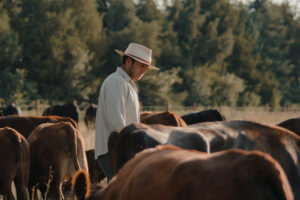 Owning land isn’t a prerequisite to loving land, regenerating land and producing healthy food. Andy Breiter does not own a single acre of land since beginning in 2020 but has grown a land base to approximately 400 acres across 7 non contiguous parcels. It has been done through building partnerships with private and public land owners. The focus of the business is utilizing livestock to regenerate land and working to create healthy land to produce healthy food. This approach provides unique sources of revenue to create ecosystem service contracts with landowners and grant projects with NGOs. Some contracts deal with grazing animals for noxious weeds, others for increased fertility, and fire mitigation contracts. Owning land is not required.
 Powerful movements are happening in our food system and Liz Carlisle, the author of Healing Grounds shares a glimpse of these movements at Eco Farm and on an earlier 2022 episode of Farm To Table. Liz is an Assistant Professor in the Environmental Studies Program at UC Santa Barbara, where she teaches courses on food and farming. Born and raised in Montana, she got hooked on agriculture while working as an aide to organic farmer and U.S. Senator Jon Tester, which led to a decade of research and writing collaborations with farmers in her home state. She has written three books about regenerative farming and Agroecology: Lentil Underground (2015), Grain by Grain (2019, with co-author Bob Quinn), and most recently, Healing Grounds: Climate, Justice, and the Deep Roots of Regenerative Farming (2022). She holds a Ph.D. in Geography, from UC Berkeley, and a B.A. in Folklore and Mythology, from Harvard University. Prior to her career as a writer and academic, she spent several years touring rural America as a country singer.
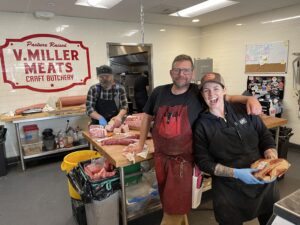 For holiday dinners, when your guests like both the idea of “plant based” and the taste of animal protein, there is a way to work-around. Vegan options may still need to be offered because this work-around is serving beef from cattle that were raised on a plant based diet. For the most part the plants the cattle consumed are largely cellulose such as grass that people can’t digest but when converted by ruminant animals it can be both nutritious and delicious. Since overeating through the holidays is often followed by going back to the gym, some animal protein can come in handy. Grass fed rib-eyes and filets are on the menu at our house, so for this episode of Farm To Table Talk we return to a podcast from last winter with East Sacramento Butcher, Eric Velman, V Miller Meats, who provided the conversion and connection between our holiday table and the plant based pastures where Christmas Eve Dinner began.
 After near extinction, the in-nii (American Bison) are slowly returning to Native American tribes who have the resources to run reintroduction programs. Latrice Tatsey, Buffalo Stone Woman, is an ecologist and cattle producer who advocates for tribally-directed bison restoration and regenerative cattle grazing. Currently, she is a graduate student in Land Resources and Environmental Sciences studying how the reintroduction of in-nii (American Bison) contributes to changes in soil characteristics. Researching how the return of the in-nii (American Bison) will influence soil, plant, water, energy, and mineral cycles shows the relationship the in-nii (American Bison) have to the land. Latrice wants to continue to conduct research involving land and creating ways to be better land stewards so that we can protect Mother Earth for future generations. Buffalo Stone Woman shares the vision with Farm To Table Talk and Eco-Farm.
 ‘High Tech High Touch’ is an early Silicon Valley term that implies a dynamic paradox. It is still a paradox in today’s agriculture where “faster/bigger” and “slower/smaller” each have a wave. In the wake of this wave, Social Scientists like Dr. Julie Guthman of the University of California in Santa Cruz are asking “how do you bring digital products to a biological production system?” The tried and true Silicon Valley ways don’t always work for the split personalities of today and tomorrow’s farms. Dr. Guthman is a geographer and professor of sociology at the University of California, Santa Cruz, where she conducts research on the conditions of possibility for food system transformation in the US. jguthman@ucsc.edu
 Slow water always wins however we can still thrive in this emerging age of climate change caused drought and deluges. Erica Gies has written a book, about “Slow Water” innovations that are helping us adapt to the increasing water dilemmas. Respect for water’s winning ways is where it all begins as this Journalist/Author shares the ways we must work for smart and slow water systems at the Eco Farm. Erica is an award-winning independent journalist and National Geographic Explorer, writing about water, climate change, plants, and animals for Scientific American, the New York Times, Nature, National Geographic, the Guardian, and other outlets. She co-founded two environmental news startups, Climate Confidential and This Week in Earth.
 Farmers face challenges ranging from rising costs for them to low prices to them and seemingly endless regulations that need more time and attention than they have the ability to give. They need to be more resourceful than ever, whether they have been farming for generations or just coming in to it from a non-farming background, Michael Kilpatrick has been helping farmers make resourceful, sometimes ‘rogue’ adjustments in their plans, execution and results that yield desired incomes. In podcasts and events including the annual Rogue Food Conference, the attainable goal is Thriving Farmers.
 The California Department of Pesticide Regulation (DPR) has reached a multimillion-dollar legal agreement with online retail giant Amazon.com Services, LLC. (Amazon) for the illegal sale of pesticides in California.Under the terms of the agreement, Amazon will pay DPR a total of $4.97 million – $3.69 million in unpaid pesticide sales assessment fees and related late penalties, and $1.28 million in civil penalties associated with retail sales of unregistered pesticides into California. Amazon also agreed to register as a pesticide broker, and report and pay the mill assessment associated with all future retail sales of registered pesticides into California. Karen Morrison,
 Chief Deputy Director and Science Advisor to the DPR explains how the regulation of crop protection materials is extending into cyber space boundaries to protect the public . www.cdpr.ca.gov
 subsequently began making an impression on thousands of people around the world with, as Wes Jackson of The Land Institute said,” a new way of looking at the tragic human and environmental consequences of chemical-dependent agriculture”. The author of this ground breaking book, Angus Wright recently passed away after a productive life. For the author of a book that begins with a death from chemical agriculture in Mexico, it seems fitting that the death of the author Angus Wright should begin with a review of lessons learned, progress made and what more is needed for “modern agriculture.” To help with this journey I’m pleased to welcome, Steve Gliessman farmer, retired University of California Santa Cruz
  professor, one of the first guests on Farm to Table Talk and an author himself– he literally wrote the book on Agroecology.
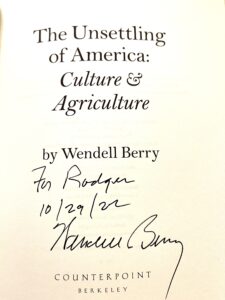 books. The new book,”The Need To Be Whole” was introduced by Wendell himself at the Kentucky Book Festival at the Joseph-Beth Book Sellers in Lexington, Kentucky. Farm To Table Talk host, Rodger Wasson was there to hear Wendell wisdom first hand. All of Wendell’s books are worth a read but “The Unsettling of America” is especially appropriate in these unsettled times. It is wonderful to hear Wendell in
  person and is almost as good to once again listen to the conversation he had in 2014 with Bill Moyers. To commemorate a special weekend in Kentucky with Wendell we’re bringing back this conversation of Wendell Berry and Bill Moyers. It is a production of the Schumann Media Center and Mannes production. www.Berry Center.org
 Food communicates origin, Corporate Social Responsibility (CSR), Environmental, Social and Governance (ESG) and global health upstream, downstream and around our tables. Progressive brands realize that in a true cost accounting future, they will need to be able to provide a suite of environmental impact metrics that go beyond just carbon to include soil, health, water data and biodiversity metrics. Wyatt Ball, Land to Market’s Client Success Manager sheds a light on the
 responsible brand journey that starts on farms or ranches and ends on our plate. www.landtomarket.com
 Creation takes place in our food chain at the farm, in the kitchen and in our favorite restaurants that “curate” a tasting experience to be savored and remembered. At the Tasting Kitchen in Los Angeles, Executive Chef Travis Passeroti creates daily hand written menus that curate the best of what is on offer that day from the Santa Monica Farmers Market and other select local suppliers and farmers. Chef Travis and the award winning food program at the The Tasting Kitchen display a passion for sustainably sourced ingredients and expert knowledge of local food communities.
 50 years ago the White House conducted a conference on Hunger, Nutrition and Health. It has finally happened again as President Biden announced a national plan for ending hunger in the United States by 2030 with these actions: 1) Improve food access and affordability; 2) Integrate nutrition and health; 3) Empower all consumers to make and have access to healthy choices; 4) Support physical activity for all; and 5) Enhance nutrition and food security research. Chef Patrick Mulvaney of Mulvaney’s B&L and Chef Santana Diaz of UC Davis Health traveled to Washington from Sacramento with an invitation to participate and then shared some of what they learned from a taxi leaving the conference and in a Clubhouse room that was opened to further the conversation.
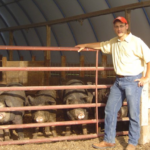 When most consumers buy pork chops or bacon, it seldom occurs to them to wonder how much space does a pig need? That question is increasingly coming up to supermarkets, restaurants, curious consumers and their legislators. The pig space question focuses on the stage between a female hog (sow or gilt) being bred and giving birth to a littler of pigs 3 months, 3 weeks and 3 days later. In that time many are confined in individual stalls about 7 feet long and a couple feet wide. California is one of the states that have banned this part of the pork production system after voters supported Proposition 12. The California law goes further, even banning the sales of pork products when ‘gestation crates’ were used, whether produced in California or other states. The US Supreme Court gets the last word on this issue. Dr. Pet Lammers is Associate Professor of Animal Scienc in the UW-Platteville School of Agriculture. Pete was raised near Johnsburg, MN on a farrow-to-finish pig farm. He earned a B.S. from UW-River Falls and a M.S. and Ph.D. from Iowa State University with majors in Animal Science and Sustainable Agriculture. He has researched pork production systems and teaches an upper level course in livestock production for niche markets.

 world, while also helping to reduce the carbon footprint. www.brazilpotash.com

 Diverse soil biology affects the farm and our evolving food system. It starts with decoding soil biology using a global data base of millions of microorganisms to both analyze which microbes are currently present and exactly what role they are playing. Adrian Ferrero, a co-founder of Biome Makers, joins Farm To Table Talk to explain the logic of a biological future with implications for the whole food chain, from farm to table. www.biomemakers.com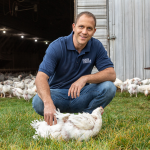
 Mitigating Climate Change will require implementing a data driven approach on every level of the business of agriculture. An agriculture-oriented satellite constellation will provide a critical perspective on the size and condition of nearly everything we grow to eat, nearly every where in the world. EOS SAT provides eyes in the sky to enable each food sector to introduce smart er sustainable agriculture practices to ensure the security of the food supply on Earth. From Kiev, Ukraine Vera Petryk , the Chief Marketing Officer shares the vision and journey of space pioneers to effect food production in a climate challenged future on Earth. www.eossat.com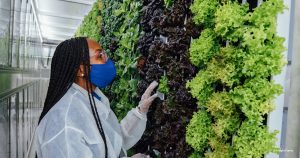
 Farmers grow enough food, yet with extreme weather events, war, pandemic, inflation and more, there are hundreds of millions of people in danger of hunger and famine. Sustainable development goals are being pursued to get the world back on track to end hunger and poverty. Asma Lateef, the Policy Lead for the SDG2 Advocacy Hub is bringing together NGOs, agricultural networks, nutritionists, campaigners, civil society, the private sector and UN agencies to co-ordinate advocacy efforts and achieve Good Food For All by 2030. www.SDG2.org

 age is a vital food. Food shortages, impacted by soaring gas prices and inflation, are affecting people in need and their ability to access staple foods. Food banks are busier than ever before. In this environment pulses such as beans, lentils and peas sustainably fill an important need for affordable nutrition. Tony Roelofs, the Vice President of the Pulse Division of Columbia Grain International explains how thousands of farms in the nation’s ‘pulse’ belt are stepping up to produce supplies for the new Balanced Bushel for programs for expanded Section 32 programs. www.columbiagrain.com
 Wendell Berry’s writings favorably compare the ways of Amish farming to the high stress modern conventional farming by “the English”. In surprising ways Amish farms offer regenerative leadership that are a modern contrast in a horse and buggy society. Through his own Modern Frontier Farm and an Amish Cooperative, Adam Rick finds that Amish farms are especially well-suited to these times when consumers want to know how their food is grown. As the average age of American farmers is pushing in to six decades plus, more young Amish farmers are stepping up to grow their business in ways that meet the future head on. Adam Rick shares his journey and what he is learning on social media, Clubhouse app and Farm To Table Talk. www. Amodernfrontier.com
 it deserves a delicious festival. Across the country, chefs, consumers and farmers have come together in celebration of bacon in events known as BaconFests. In the acclaimed Farm to Fork Capitol, Sacramento California, Farm to Table Talk joins the Bacon Fest festivities in conversation with talented and enthusiastic chefs, including: Patrick Mulvaney, Mulvaney’s B&L; Dennis Sydnor, Renegade Dining, Bucky Bray, Canon; Brian Guido, Baconfest founder; Chris Barnum-Dann, Localis; Gregory Desmargles, Urban Roots Brewery and Smokehouse; Ravine Patel, Hyatt Centric Sacramento; Lauren Petri and Ryan Visker, Nixtaco; Elena Winks, Franquette; and Scott Williams, Moksa Brewing Company. The winner of the 11th Guido Cup for top entry went to Juan and Kristin Barajas, Woodland’s Savory Cafe.
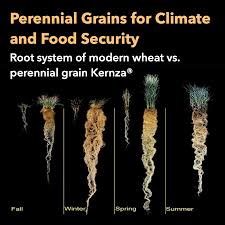 planet is in danger and it’s time for us to think even bigger.” These words of wisdom are surprisingly to be found on a climate smart Kernza Grain cereal by Cascadian Farm. Thanks to the research and development at the Land Institute in Salina Kansas, the deep rooted, soil healthy perennial grain will store more carbon, prevent soil erosion and preserve clean water. Plus it makes nutritious tasty cereal and soon other food products. Tim Crews is the Chief Scientist at the Land Institute and a believer in what perennial plants like Kernza can offer the planet. www.landinstitute.org